As the principal judicial organ of the United Nations, the International Court of Justice (ICJ) also known as the World Court has been settling legal disputes between states and providing advisory opinions on legal questions referred to it by the General Assembly, Security Council, or other UN bodies. While the ICJ’s involvement in the international legal system, its ability to reshape global governance issues is somewhat limited.
Cases brought before the ICJ, such as those involving Israel and Russia, can potentially impact global governance by setting precedents and clarifying legal principles. However, the ICJ’s jurisdiction is limited to cases where states voluntarily submit to its authority, and enforcement mechanisms are relatively weak.
Regarding the Israel-Palestine case, the International Court of Justice (ICJ) recently heard arguments from more than 50 countries and three international organizations. The six-day hearings were based on a request by the UN General Assembly (UNGA) for a nonbinding advisory opinion on the legality of Israel’s policies in the occupied Palestinian territories. A panel of 15 judges is anticipated to issue a non-binding advisory opinion on the request, which includes considerations of the legal status of the occupation and its consequences.
Israeli Prime Minister Benjamin Netanyahu rejected the legitimacy of the proceedings at The Hague, stating that Israel would maintain full security control over areas west of the Jordan River, encompassing Judea and Samaria (the West Bank) and the Gaza Strip… Read More
|
|
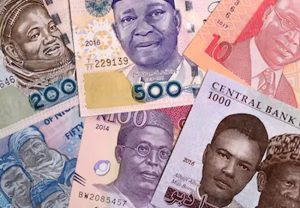
The debate surrounding the decision between fixed and floating exchange rate systems has intensified, particularly in the context of African economies. This discussion gains importance when considering the challenges faced by local currencies against the U.S. dollar. The pressure most of these African currencies are facing due to higher US interest rates complicates efforts to curb inflation in a region heavily reliant on imports. A pertinent case study is the fall of the Nigerian Naira which has weakened against the US dollar, fueling inflation as import prices surge amid a growth slowdown. Policymakers face tough decisions in balancing inflation control with a fragile recovery.
According to the International Monetary Fund, the U.S. dollar accounts for 60% of the transactions globally. In nations like Zimbabwe and Ethiopia, accessing dollars poses considerable challenges due to scarcity. Efforts to enhance liquidity through foreign exchange platforms outside the more developed South African market encounter persistent obstacles. The dynamics of currency depreciation are intricately linked to the level of central bank intervention and their willingness to deploy foreign exchange reserves to stabilize local currencies against the dollar.
The sub-Saharan region has experienced an average depreciation of about 8% since January 2022, with variations among countries, an IMF report on Managing Exchange Rate Pressures in Sub-Saharan Africa reveals. Ghana’s cedi and Sierra Leone’s leone depreciated by over 45%. External factors primarily drove these depreciations, including lower global market risk appetite and US interest rate hikes diverting investors to safer US treasury bonds. Economic slowdown in major economies reduced demand for the region’s exports, impacting foreign exchange earnings. High oil and food prices, partly due to Russia’s war in Ukraine, further increased import costs in 2022… Read More
|
|
Africa like other nations has been faced with countless issues that jeopardize its peace and security, placing it at a crossroads in a globe riven by violence and uncertainty. Initiatives to promote harmony and stability are essential in light of this Peace and security summits serve as vital platforms for African nations to collectively address the root causes of instability, forge strategic partnerships, and chart a course towards sustainable peace. As the African continent prepares to convene for the Peace and Security Summit organized by the African Leadership Organization in Abuja, in March 2024, the significance of such gatherings cannot be overstated.
Former Secretary-General of the United Nations, Kofi Annan once said, “in the absence of peace and security, sustainable development remains an elusive dream.” With the theme, “Peace, Security, and the Governance Landscape in Africa”, these gatherings provide a special chance for African leaders, decision-makers, civil society groups, and regional blocs to engage in communication and cooperation. These meetings offer a forum for exchanging best practices, exchanging experiences, and developing all-encompassing strategies to address current issues. Summits act as accelerators for creating agreement and gaining support for peacebuilding activities by encouraging open dialogue and a sense of collective ownership.
Identifying and addressing root causes is a crucial component of any successful peace and security plan. A number of fundamental causes, including poverty, inequality, corruption, weak government, and the spread of weapons, are responsible for the current conflicts in Africa. Summits on peace and security provide a platform for determining these underlying reasons and creating comprehensive strategies that deal with both acute triggers and systemic problems. Summits clear the path for long-term peace and stability by advancing socioeconomic development, sound governance, and conflict resolution procedures… Read More
|
|
|