Category: Brands

  • Shell reinforces safety commitment at CEO Contractors Forum

    Shell reinforces safety commitment at CEO Contractors Forum

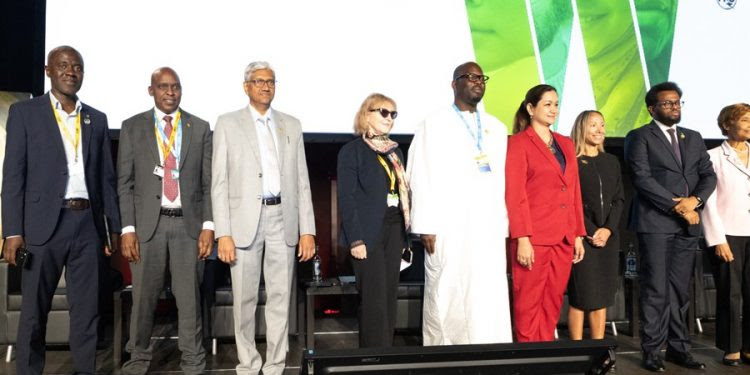
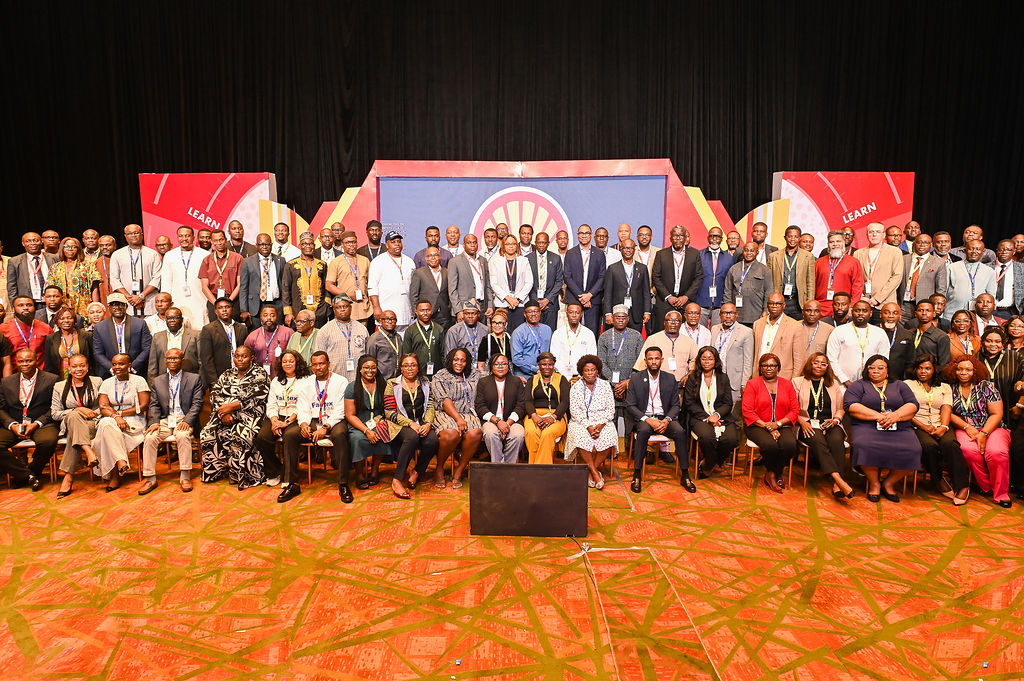
    Shell leaders and Contractor CEOs at the Annual Shell Leadership and Contractor CEO Conference, reaffirming their shared commitment to collaboration, operational excellence, alignment on strategic priorities, and sustainable business performance

    Shell yesterday, August 18, hosted chief executives of contracting companies in Lagos highlighting the need to sustain safe operations across its businesses in Nigeria. The annual Shell Leadership and Contractor CEO Conference aims to shine a light on “a shared commitment to people, performance and safety.”

    The theme of this year’s event is “Learn. Adapt. Improve.” Addressing the session, Executive Vice President and Country Chair Nigeria, Elohor Aiboni said: “Shell is delivering an extensive portfolio of projects and operations that will help meet Nigeria’s growing energy needs, create value for our stakeholders, and support national development. We are advancing major opportunities, executing complex work, and pursuing ambitious goals. But no matter how significant the opportunity, no matter how important the project, our success will always be measured first by how safely we deliver it. That is why this conference matters.”

    The conference featured among other things, discussions and cascade of learnings, an exhibition and awards and recognitions for outstanding safety performances. The highlight of the event was the signing of the Leadership Charter which was jointly created in 2025 through collaboration between SNEPCo and her contractor partners.

    “This year’s conference theme, Learn. Adapt. Improve, connects strongly with the purpose of the Charter,” SNEPCo Managing Director Ronald Adams said before the signing. “To learn, we must be honest about what has worked, what has been difficult, and what our people and operations are telling us. To adapt, we must be willing to adjust our approach where the realities of work require us to do better. To improve, we must make sure that the commitments in the Charter are not only discussed during conferences, but embedded into how we lead, how we engage, how we review performance, and how we support safe execution every day.”

    Elohor reiterated the place of safety in company operations, adding: “Every person who works for Shell or on behalf of Shell deserves to return home safely to their family, every day, without exception.”

  • NRS Chairman Adedeji dismisses online report on Frontier Exploration Fund as sponsored fake news

    NRS Chairman Adedeji dismisses online report on Frontier Exploration Fund as sponsored fake news

    The Executive Chairman of the Nigeria Revenue Service (NRS), Zacch Adedeji, has dismissed online reports linking the NRS to an imaginary fraud related to the Frontier Exploration Fund, calling it sponsored fake news.
    The report had alleged the transfer of $279 million from the Fund’s account to some unnamed accounts and claimed that Adedeji and the NRS were in the know of the ‘illegal’ movement of money.
    According to the report, the alleged fraud had put Adedeji under pressure with stakeholders calling for forensic audit of the Fund’s account.
    But in his reaction via telephone, Adedeji dismissed the said report as fake news based on the imagination of some persons determined to tarnish his reputation and the image of the NRS.
    “That report is not true in any way. It is pure fake news sponsored by some jobless persons whose pastime is to throw mud at high performers in the President Tinubu government. I consider it to be a brand of cheap journalism lacking in ethics and professionalism but heavy with malicious intentions.
    “To prove to you that it was sponsored, take a critical look at the storyline and language. They are the same language and style in all the reports, meaning that one person wrote it and distributed across gullible online platforms,” Adedeji said.
    The NRS chairman said that the sponsors of the report exhibited lack of understanding on what the Frontier Fund was all about and how it is disbursed.
    He explained that the Frontier Exploration Fund was established under Section 9 of the Petroleum Industry Act, 2021 and was meant to finance petroleum exploration activities in frontier basins where commercially viable hydrocarbon reserves are yet to be fully established,
    The frontier basins include Bida, Benue Trough, Anambra, Chad, Sokoto and Dahomey Basins. The Fund is to used for expenses in geological mapping, seismic surveys, exploratory drilling, appraisal wells, basin studies and other exploration activities.
  • Zenith Bank Widens the Gap: Inside Nigeria’s Best-in-Class Lender

    Zenith Bank Widens the Gap: Inside Nigeria’s Best-in-Class Lender

    Fresh off a sweep of Euromoney’s most coveted awards, a completed acquisition in Kenya, a newly opened subsidiary in Francophone West Africa, and plans for a London Stock Exchange listing in 2027, Nigeria’s most profitable bank is now making the case that it is also the best-run one.

    A close read of its unaudited first-quarter 2026 financial statements — its net interest income, fee income, capital buffers and loan book all expanding faster than the industry average — backs that case up with numbers.

    The Lagos-based lender’s Group profit before tax rose 3% year-on-year to ₦361 billion in the three months to March 31, 2026, the highest absolute pre-tax profit among Nigeria’s seven largest banks and the only one of the group to combine top-line profitability with double-digit growth in net interest income, fee income and shareholders’ equity simultaneously.

    Layer on a historic Euromoney double and an accelerating Pan-African build-out, and the numbers tell a story that goes well beyond one good quarter.

    Balance Sheet Scale: Bigger, Cleaner, Better Capitalized

    Zenith closed the first quarter of 2026 with total assets of ₦32.01 trillion, up 1.8% from ₦31.46 trillion at the end of December 2025, even as the balance sheet held broadly flat year-on-year against the ₦32.42 trillion reported in March 2025 — a sign of a bank actively re-shaping its asset mix rather than simply expanding its footprint.

    Customer deposits, the cheapest and stickiest source of funding for any lender, climbed 7.9% year-on-year to ₦24.47 trillion, while total shareholders’ equity surged 16.3% to ₦5.17 trillion — a rate of capital accretion that outpaces balance-sheet growth and signals a bank retaining and compounding earnings rather than chasing volume.

    That equity build has real consequences for market standing. Zenith Bank’s shares have gained more than 104% year-to-date through July 23, 2026, pushing its market capitalization to roughly ₦5.18 trillion.

    The top three banks by market capitalization are now separated by less than 2% of market value — but Zenith is the only one of the trio backing its valuation with the industry’s fastest brand-value growth, up 33.6% on the continent, according to the latest report by Brand Finance.

    While Access Holdings’ aggressively acquisitive strategy has made it Nigeria’s largest bank by sheer balance-sheet size — ₦51.56 trillion in total assets as of 2025 — Zenith’s smaller, more capital-efficient balance sheet is generating disproportionately more profit per naira of assets deployed, a theme that recurs throughout its results.

    Loan Book: Growing Faster Than the Balance Sheet, Cleaner Than a Year Ago

    Zenith’s credit expansion in the first quarter outpaced every other line on the balance sheet. Gross loans and advances to customers rose 8.6% year-on-year to ₦12.04 trillion, while net loans — after impairment allowances — jumped a sharper 13.2% year-on-year to ₦11.38 trillion, reflecting both fresh credit extension and an improving quality of the existing book.

    That improvement in quality is the more important story for analysts and investors skeptical of loan growth achieved by lowering underwriting standards.

    Zenith’s non-performing loan ratio — Stage-3, credit-impaired loans as a share of gross loans — stood at 3.79% at the end of March 2026, essentially flat against 3.82% at the end of 2025 but down sharply from 4.70% at the end of 2024, continuing a multi-year de-risking trend even as the loan book itself expanded.

    Independent disclosures from full-year 2025 put Zenith’s loan-loss coverage ratio at 172.6% — meaning provisions held against bad loans exceed the value of the impaired loans themselves by more than 70%, a comfortable buffer well above what regulators require.

    Growing the loan book faster than the balance sheet while simultaneously cutting the bad-loan ratio is a combination few Tier-1 African lenders can claim in the same quarter.

    Interest and Fee Income: A Diversifying Revenue Engine

    Zenith’s income statement shows a bank successfully diversifying away from pure interest-rate carry. Gross earnings for the quarter rose 6.1% year-on-year to ₦1.01 trillion, but the composition of that growth is the more telling detail.

    Net interest income — the core spread between what the bank earns on loans and investments and what it pays on deposits — climbed 7.3% to ₦634.1 billion, the largest net interest income of any Nigerian bank in the quarter.

    Africans & Diaspora

    The standout, however, is fee income. Net fee and commission income surged 44.6% year-on-year to ₦81.0 billion, up from ₦56.0 billion a year earlier — a growth rate more than six times faster than net interest income and a clear signal that Zenith is successfully monetizing transaction banking, digital channels and card services rather than relying solely on its loan book for growth.

    For full-year 2025, the bank’s net interest margin stood at 13.7%, one of the widest among Nigerian Tier-1 banks and a reflection of disciplined asset-liability pricing through a high-rate environment.

    Return on Equity: Profitability That Outruns Balance-Sheet Growth

    Return on average equity is where Zenith’s capital discipline shows up most clearly. The bank closed full-year 2025 with a return on average equity of 23.2% and a return on average assets of 3.4%, both figures independently disclosed alongside its FY2025 results.

    That profitability was rewarded directly at the shareholder level: Zenith’s board doubled its total dividend for 2025 to ₦10.00 per share — split between a ₦1.25 interim payout and a ₦8.75 final dividend — from ₦5.00 the previous year, distributing roughly ₦410.7 billion to shareholders, one of the largest dividend payouts in Nigerian corporate history.

    Cost discipline underpins the returns: full-year 2025 cost-to-income ratio came in at 45.2%, while the bank’s own Q1 2026 figures point to further improvement, with operating expenses absorbing roughly 47.15% of operating income for the quarter — a leaner ratio than the FY2025 run rate.

    Against peers, the ROE story favors Zenith on a risk-adjusted basis.

    Capital Adequacy: A Fortress Balance Sheet

    Regulators and rating agencies alike have flagged Zenith’s capital position as a standout. The bank’s capital adequacy ratio stood at roughly 25% at the end of full-year 2025 and its liquidity ratio at 71%, both comfortably clear of the Central Bank of Nigeria’s regulatory minimums for systemically important banks. Fitch Ratings’ most recent update pegs Zenith’s standalone total capital ratio even higher, at 25.8% at end-2025, against a fully-loaded core capital ratio of 28% — a buffer Fitch frames as well in excess of regulatory requirements.

    Equity research from CardinalStone projects that buffer widening further, forecasting a capital adequacy ratio of 28.7% for 2026 and 30.8% for 2027 as retained earnings continue to compound. A capital position this deep gives Zenith room to absorb credit shocks, fund loan growth internally, and — as its international ambitions make clear — write bigger cross-border checks without straining its own solvency.

    A Historic Euromoney Double

    The market recognition arrived in force this month. At the Euromoney Awards for Excellence 2026, presented July 16 at The Peninsula London Hotel against a record field of more than 770 entries, Zenith Bank was named both “Africa’s Best Bank” and “Nigeria’s Best Bank” — the latter for the second consecutive year, having also won the national title in 2025.

    Zenith Bank, Group Managing Director Dr. Adaora Umeoji called the double “a reflection of the trust of our customers, the dedication of our unicorn workforce, and our unwavering commitment to building a truly African global financial institution.”

    The Euromoney sweep sits atop an already crowded trophy shelf: Zenith has been ranked the Number One Bank in Nigeria by Tier-1 Capital for 17 consecutive years in The Banker’s Top 1000 World Banks Ranking, and has separately been named Bank of the Year (Nigeria) by The Banker in 2020, 2022 and 2024, and Best Bank in Nigeria by Global Finance’s World’s Best Banks Awards in 2020, 2021, 2022, 2024 and 2025.

    Africans & Diaspora

    Pan-African Expansion: Kenya, Côte d’Ivoire and a London Listing

    Zenith’s ambitions have moved decisively past Nigeria’s borders in 2026, on three fronts simultaneously.

    East Africa: In April 2026, Zenith completed its acquisition of 100% of the issued share capital of Paramount Bank Kenya Limited, following regulatory approvals from both the Central Bank of Kenya and Nigerian authorities — a deal first disclosed in November 2025.

    Paramount is a modest player — ranked 33rd of Kenya’s 39 licensed banks with roughly 0.2% market share — but the acquisition hands Zenith a regulated foothold in East Africa’s largest and most stable economy, with GDP exceeding $136 billion, giving it a platform to build out corporate and trade-finance relationships beyond West Africa.

    Francophone West Africa: On April 29, 2026, Zenith formally launched its Côte d’Ivoire subsidiary at SCI Wall Street in Abidjan’s Plateau business district — its first entry into Francophone West Africa after securing a license from the Ivorian Ministry of Finance and Budget in December 2025 and regulatory clearance from the UMOA Banking Commission.

    The subsidiary, led by Cédric Tano, gives Zenith direct access to the eight-nation WAEMU currency bloc — Senegal, Mali, Burkina Faso, Niger, Guinea-Bissau, Togo, Benin and Côte d’Ivoire — and comes as the bank simultaneously moves into Cameroon and the Central African Economic and Monetary Community.

    “We are proud to establish Zenith Bank’s presence in Côte d’Ivoire at a time of strong economic growth in the country and increasing regional integration,” Tano said at the launch. GMD Adaora Umeoji framed the move as fulfilling founder Jim Ovia’s founding vision: “to build a truly global brand with a strong presence across Africa and key international markets.”

    The Ivorian entry follows a ₦350.5 billion (roughly $231 million) capital raise disclosed in 2025, of which 40% was earmarked specifically for overseas expansion, alongside a newly secured Paris branch license to support the broader Francophone Africa push.

    London: Perhaps the most consequential long-term move is Zenith’s stated intent to list on the London Stock Exchange in 2027. Bloomberg first reported the plan on March 17, 2026, describing Zenith as seeking to “broaden access to capital and strengthen client services.”

    A bank spokesperson told Bloomberg the rationale is explicitly deal-driven: “There are a lot of deals we have on the table to finance across the UK and other countries, for which we need to raise more capital.”

    The plan builds on Zenith’s existing UK subsidiary and Manchester branch network, and would give the bank direct access to deeper international capital pools to fund the very cross-border pipeline its Kenyan and Ivorian expansions are now generating.

    Taken together, the Kenya deal, the Côte d’Ivoire launch and the LSE listing plan describe a bank building simultaneously outward in three directions — East Africa, Francophone West Africa, and international capital markets — rather than defending Nigerian market share alone.

    The Bottom Line

    No single data point confirms Zenith Bank’s case as Nigeria’s Best-in-Class Lender — it is the accumulation of them. A balance sheet growing its loan book faster than its total assets while cutting bad debt. A revenue mix diversifying into fee income at a 44.6% annual clip. A capital position deep enough that rating agencies and equity researchers alike see room for it to widen further through 2027. A shareholder payout that doubled in a single year. And now, external validation from the industry’s most competitive award program, layered on top of simultaneous expansion into Kenya, Côte d’Ivoire and — pending 2027 — the London Stock Exchange.

    Rivals can point to faster growth in isolated quarters, but none combine Zenith’s scale, capital strength and cross-border momentum in the same reporting period. That combination, more than any single metric, is what underpins the “best-in-class” label Euromoney’s judges affixed to Zenith Bank this July.

    NOTE: This analysis draws on Zenith Bank Plc’s unaudited consolidated financial statements for the three months ended March 31, 2026, supplemented by independent research and data from MoneyCentral, Bloomberg, ThisDay, Nairametrics, Euromoney, Fitch Ratings, CardinalStone Research, Brand Finance and other sources. All figures are in Nigerian naira unless otherwise stated. Market capitalization and share-price data reflect trading as of the cited publication dates (July 23, 2026) and are subject to change.
  • Stanbic IBTC unveils ‘You’re Built for Growth’ campaign; reinforces commitment to clients’ growth

    Stanbic IBTC unveils ‘You’re Built for Growth’ campaign; reinforces commitment to clients’ growth

    Stanbic IBTC, a member of Standard Bank Group, has officially launched its new thematic brand campaign, ’You’re Built for Growth’, a bold expression of the Group’s commitment to supporting individuals, businesses and communities as they pursue their ambitions and unlock new opportunities.
    The integrated campaign, which spans television, radio, print, social media, out-of-home (OOH) and digital out-of-home (DOOH) platforms, celebrates the resilience, determination and potential as key drivers of progress across Nigeria. Through relatable stories and inspiring narratives, the campaign reinforces Stanbic IBTC’s role as a trusted financial partner that helps clients and stakeholders achieve growth in all its forms.
    At the heart of the campaign is a simple but powerful belief: growth is not reserved for a select few. Whether it is starting a business, expanding an enterprise, building wealth, securing a family’s future or pursuing personal aspirations, every individual and organisation has the potential to achieve more with the right support.
    Speaking on the campaign, Chuma Nwokocha, Chief Executive, Stanbic IBTC Holdings, said:  “At Stanbic IBTC, we are clear on our purpose: to support growth, open up opportunities, and stand by our clients at every stage of their journey. ‘You’re Built for Growth’ reflects who we are as a Group – a trusted partner you can rely on; a forward-looking institution creating new possibilities; and a committed partner helping individuals and businesses achieve lasting success.”
    More than a marketing campaign, ‘You’re Built for Growth’ is a reaffirmation of Stanbic IBTC’s enduring commitment to creating value, building trust and enabling sustainable growth for its clients, communities and the economy.
    The campaign’s flagship television commercial brings this message to life through compelling representations of ambition, perseverance and achievement, while complementary radio, print, digital and outdoor executions extend the message to audiences across the country.
    Stanbic IBTC intends to continue demonstrating the importance of support for achieving real growth as the Group continues to empower Nigerians to pursue their goals with confidence.
    Bridget Oyefeso-Odusami, Head, Brand and Marketing, Stanbic IBTC Holdings, also expressed the meaning of growth as embodied in the company’s new campaign.
    She said “Growth means different things to different people. For some, it is building a business. For others, it is growing their savings; protecting what matters most; investing for the future or creating opportunities for future generations. Whatever that journey looks like, Stanbic IBTC remains committed to helping our clients achieve growth.”
    With a heritage of supporting progress and enabling opportunity, Stanbic IBTC continues to provide comprehensive financial solutions that help individuals, businesses and institutions navigate an evolving world and build sustainable futures.
     
  • Maida, NCC Helsman Ties Nigeria’s Digital Economy to Trust in Phone Numbers, Networks and Markets

    Maida, NCC Helsman Ties Nigeria’s Digital Economy to Trust in Phone Numbers, Networks and Markets

    Dr. Aminu Maida, the Executive Vice Chairman/CEO of the Nigerian Communications Commission, has outlined Nigeria’s strategy for securing digital public infrastructure, around a single asset-the mobile phone number.

    This, he said has evolved from a communications tool into the access key for banking, government services, healthcare, education and commerce.

    Maida made the remarks during a contribution to the WSIS 2026 Leaders’ TalkX session on building secure and trusted digital public infrastructure.

    He said Nigeria’s approach rests on three pillars, trusted identities, trusted networks and trusted markets, which together determine the resilience of the country’s digital economy.

    Trust in Identity

    On identity verification, Maida pointed to the NCC’s Telecommunications Identity Registration Management System (TIRMS), which he said allows authorised institutions to securely verify the identity behind any phone number.

    “Through our TIRMS platform, authorised institutions can securely verify who is behind every phone number, helping to strengthen accountability and reduce fraud,” he said.

    Trust in Networks

    On network resilience, Maida cited the Communications Sector Cyber Resilience Framework and the implementation of the Presidential Order designating telecommunications infrastructure as Critical National Information Infrastructure (CNII), both of which he said are driving coordinated work between government, industry and other stakeholders to strengthen the security of Nigeria’s communications infrastructure.

    Trust in Markets

    On markets, Maida said consumer confidence and investor confidence depend on different but related conditions.

    “Consumers need reliable, affordable services and effective redress, while investors need transparent, predictable and consistent regulation that gives them confidence to invest,” he said.

    He summarised the framework as a single dependency chain: resilient digital public infrastructure, he said, ultimately rests on trusted identities, trusted networks and trusted markets working together.

  • POLO AVENUE INVITES LAGOS TO ITS EXCLUSIVE 2026 SAMPLE SALE

    POLO AVENUE INVITES LAGOS TO ITS EXCLUSIVE 2026 SAMPLE SALE

    Polo Avenue, Nigeria’s premier luxury fashion destination, is set to
    host its highly anticipated 2026 Sample Sale, offering discerning shoppers an
    exclusive opportunity to discover exceptional luxury fashion at remarkable prices.
    Taking place from 11th – 25th July 2026 at 59 Raymond Njoku Street, Ikoyi, Lagos, the
    two-week shopping experience will feature a carefully curated selection of readyto-wear, handbags, shoes and accessories from some of the world’s most coveted
    luxury maisons, including Dolce & Gabbana, Bottega Veneta, Casablanca, and
    more, with up to 70% off selected pieces.
    Designed as more than a seasonal sale, the Polo Avenue Sample Sale offers clients
    the opportunity to experience luxury retail in an elegant setting while discovering
    iconic pieces from globally renowned fashion houses. Whether refreshing a
    wardrobe or investing in timeless statement pieces, visitors can expect exceptional
    value without compromising on quality, craftsmanship or style.
    Open daily from 11:00 a.m. to 7:00 p.m., the Sample Sale will showcase limited
    quantities across multiple luxury categories, with new discoveries awaiting clients
    throughout the event.
    With exceptional pieces available in limited quantities, early visits are strongly
    encouraged to enjoy the widest selection before they are gone.
    Clients are also invited to follow Polo Avenue’s social media platforms for exclusive
    previews, product highlights and updates throughout the two-week shopping
    experience.

  • ZENITH BANK CROSSES N1 TRILLION MARK IN Q1 2026 GROSS EARNINGS

    ZENITH BANK CROSSES N1 TRILLION MARK IN Q1 2026 GROSS EARNINGS

    Zenith Bank Plc has announced its unaudited results for the first quarter ended 31st March 2026, with a 6% growth in Gross Earnings, from N950 billion reported in Q1 2025 to N1.01 trillion in Q1 2026. This is despite the challenging operating environment and tightening monetary policy stance.


    From the unaudited statement of account submitted to the Nigerian Exchange (NGX) on Thursday, 30th April 2026, this growth was driven by increase in interest income and non-interest income. The increase in interest income was primarily due to the expansion of the Bank’s risk asset portfolio, supported by disciplined, risk adjusted pricing. Interest expense moderated by 5% YoY in Q1 2026 underscored by a continued optimisation of the Bank’s deposit mix and funding structure. This resulted in a 7% growth in net interest income from N591 billion in Q1 2025 to N634 billion in Q1 2026. Non-interest income also improved 19% year on year, rising from N89 billion to N106 billion, highlighting an improvement in fees and commissions and higher contributions from other operating income streams. This performance reflects stronger customer activity and deeper transaction volumes across key business channels.


    As a result, the Group recorded a 3% year on year increase in profit before tax, which rose to N361 billion compared with N351 billion in Q1 2025. Profit after tax also increased by 1% to N314 billion.


    Profitability was further supported by a decline in cost of funds to 3.76% in Q1 2026 from 3.90% in Q1 2025; while cost of risk moderated to 2% in Q1 2026, reflecting a prudent and proactive risk management stance in an elevated yield environment.


    Gross loans increased by 9% from N11.06 trillion as at full year 2025 to N12.04 trillion in Q1 2026, reflecting the continued commitment to carefully deploying credit into high growth sectors of the economy that enhance portfolio returns. Asset quality strengthened as Non-Performing Loan (NPL) ratio eased to 3.79%, from 3.82% reported in December 2025, underpinned by disciplined credit risk management. Customer deposits rose to N24.47 trillion in Q1 2026, while total assets increased by 2% to N32.01 trillion over the same period.


    Return on Average Equity (ROAE) and Return on Average Assets (ROAA) stood at 24.9% and 4% respectively, supported by strong top line earnings and enhanced balance sheet efficiency. Net interest margin (NIM) strengthened to 12.5%, up from 10.3% in Q1 2025, underscoring the Group’s ability to preserve its margins and deliver improved shareholder returns. Prudential ratios remained strong and comfortably above regulatory requirements.


    The Group’s Capital Adequacy Ratio (CAR) and Liquidity Ratio stood at 23.5% and 71% respectively, while the coverage ratio remained strong at 169%, reinforcing the Bank’s resilient capital and liquidity position.


    The Group’s Q1 2026 performance underscores its continued focus on sustaining high quality earnings growth, further strengthening asset quality, and deepening customer engagement through continued digital innovation. The Bank remains firmly committed to delivering sustainable growth anchored on sound corporate governance, prudent risk oversight, and disciplined capital allocation.


  • VDT, Zoracom Join MTN, Digital Realty To Back eBusinesslife Girls In ICT Campaign

    VDT, Zoracom Join MTN, Digital Realty To Back eBusinesslife Girls In ICT Campaign

    Dominant Telecommunications firm, MTN Nigeria, has reaffirmed its
    commitment to ensuring that the gender disparity in the ICT career
    sector is bridged. This statement was made with the backing of the 2026
    edition of the International Girls in ICT Day campaign being organized
    by eBusiness Life Communication Limited.
    The event, which will be held at the Lagos Oriental Hotel on June 25,
    2026, is part of an annual campaign initiated by the International
    Telecommunications Union (ITU) to sensitize and encourage young women
    and girls to delve into ICT and related careers, which are seen to have
    been dominated by the male gender. The 2026 theme is “AI For
    Development: Girls Shaping The Digital Future”.
    MTN Nigeria is one of Africa’s largest providers of communications
    services, connecting over 87 million people in communities across the
    country with each other and the world.  Guided by a vision to lead the
    delivery of a bold new digital world, MTN Nigeria has been at the
    forefront of this campaign to build human capacity in Nigeria.
    Alongside MTN Nigeria, Broadband communication service provider VDT
    Communications Limited has also indicated interest in being part of this
    year’s campaign. VDT is a licensed Private Network service provider
    specializing in the provision of Enterprise Wide Area Network (WAN) and
    Metropolitan Area Network (MAN) link connectivity using Fibre Optic and
    Wireless Communication infrastructure and access networks.
    VDT is a leading Broadband communication service provider to corporate
    organizations with leased Fiber Optic trunks to the thirty-six (36)
    states in Nigeria and the FCT, with 145 Points-Of-Presence (POP) and
    counting with localized technical support staff.
    Technology company and fast-growing provider of network and service
    management solutions, Zora Communications Limited (Zoracom), and leading
    provider of carrier-neutral data center, co-location infrastructure,
    Digital Realty Nigeria, have also joined in partnership with the
    organizers. Zoracom manages heterogeneous network infrastructure through
    innovative solutions that offer end-to-end visibility into complex
    digital infrastructure.
    Digital Realty West African hub unites connectivity, enterprise, and
    financial services. Empowering businesses in Lagos, Nigeria, with access
    to undersea cables. The company operates one of the world’s largest data
    center platforms, with 300+ data centers spanning 55+ metros across 6
    continents. From single racks to multi-megawatt AI deployments,
    delivering the flexibility, global reach, and open ecosystems needed to
    power innovation.
    Zoracom is a technology company for Observability, Cybersecurity and
    Infrastructure management, offering solutions that include a unified
    network & services management solution for Telco, Miro, Zmart & Fortrex.
    Both multiple award winning technology firms have in the past,
    demonstrated their support towards ensuring gender balance and youth
    engagement in the technology ecosystem.
    According to the CEO of eBusiness Life Communication Limited and
    convener of the event, Mrs. Ufuoma Emuophedaro, the annual event
    underscores the important role women are meant to play in the future of
    innovative technology.
    While appreciating the companies and institutions that have supported
    the campaign over the years, Mrs. Emuophedaro called on other
    forward-looking organizations to join hands with eBusiness Life to
    sensitize young girls on the need to strategically position themselves
    for the careers of the future by latching on to the provisions of
    technology today.
    She noted that the campaign is premised on the fact that society has
    unconsciously relegated the female gender and delegated careers in
    technical fields, especially in ICT, to their male counterparts.
    According to her, efforts should be made to introduce young girls to
    career opportunities in technical fields in both the public and private
    sectors to help them have a wider range of options and contribute their
    quota in the industry and in the development of the economy.
    She said: “We need to equip the girls with transferable and lifelong
    skills such as critical thinking, creativity and digital awareness.
    Having role models will also be critical, especially in the sciences and
    other fields where the presence of women is sparse.”
    The 2026 International Girls in ICT celebration event will feature
    different competitions among female students from widely selected
    private and public secondary schools. These include STEM Quiz and
    practical tech competitions. Other features of the day will include the
    Student’s Roundtable Discussion, interactive and motivational talk from
    renowned women ICT professionals.
    Awards and gift prizes will be given to winning schools and students of
    the Quiz and Tech competitions. Also, awards will be given to deserving
    women who have exemplified themselves in the ICT industry.
    The International Girls in ICT Day is an initiative launched through ITU
    Resolution 70 with the idea of creating a global environment that will
    empower and encourage girls and young women to consider careers in the
    field of information and communication technologies.
    At the end of the event, it is expected that the young students should
    be able to introspect and pursue any desired career path in ICT,
    technical or not, without bias or being gender conscious.
    This year’s event will have top government and private sector executives
    in attendance.

  • UBA Again As Court Slams “Constructive Dismissal,” —Awards N9.1m Damages to Bank’s Ex-Manager

    UBA Again As Court Slams “Constructive Dismissal,” —Awards N9.1m Damages to Bank’s Ex-Manager

    The Lagos division of the National Industrial Court of Nigeria, has ruled against United Bank for Africa (UBA) Plc in a protracted employment dispute, declaring the exit of a former branch manager, Mrs. Emelda Azuka Okereke, as wrongful and amounting to constructive dismissal.

    Justice Sanda Audu Yelwa who presided over the court in a judgment delivered on April 29, 2026, held that the bank’s actions, including backdating an “advice to resign” letter and reversing previously paid benefits were unlawful, oppressive, and inconsistent with fair labour practices.

    The judge consequently awarded the claimant a total sum of N9.122, 035.72 million in general damages, alongside other financial entitlements and interest in favour of the claimant.

    The claimant, Mrs. Emelda Azuka Okereke through her lawyer, Olabamiji Adeyeye, had the suit filed in November 2020, stemmed from events in January of that year when Okereke, after returning from annual leave, discovered she had been locked out of her work system. On the same day, she received a credit alert labelled as “benefits,” signaling an impending exit.

    She was subsequently invited to a meeting where she was advised to resign, an option she resisted, requesting formal termination instead.

    Central to the case was a letter titled “Advice to Resign,” dated January 3 but only issued to the claimant on January 9. The court found this backdating to be fraudulent and a key factor in establishing that the resignation submitted by Okereke on January 10 was not voluntary but induced by the bank’s conduct.

    The defendant, UBA Plc in its Preliminary Objection to the suit filed through its lawyer, Vitus Nwokediaso, argued that the claimant failed to exhaust internal dispute resolution mechanisms outlined in its employee handbook.

    In deciding the suit, Justice Yelwa, dismissed the bank’s objection, describing the provisions as “uncertain and clumsy,” and an impediment to the constitutional right of access to court. It reaffirmed that internal procedures cannot override judicial authority in labour matters.

    The judge ruled that the sequence of events, blocking system access, issuing inconsistent disengagement letters, and reversing credited benefits, demonstrated that the bank had predetermined the claimant’s exit without following due process. “These acts made the working environment intolerable and left the claimant with no real option but to resign,” the court held.

    In conclusion, the court awarded the sum of N5 million damages against the bank in favour of the claimant.

    The judge also ordered the bank to pay Okereke N179,277.01 as salary in lieu of notice and N78,343.26 as her January 2020 salary. It also awarded N3.32 million for 64 days of unused leave, along with leave allowance and a 13th-month bonus.

    The court also directed the reversal of all debits and interest charges applied to the claimant’s account, including deductions tied to a consumer loan. While it held that the loan was insured against involuntary job loss and that the bank breached its duty by failing to invoke the insurance before making deductions.

    The court further awarded N500,000 as the cost of the suit and imposed a 10 percent annual interest on all monetary awards from January 10, 2020, until full payment is made.

    The court, however, declined claims for ex-gratia payments and additional concessions, ruling that such benefits were not contractually guaranteed.

  • WATISE 4.0 & Awards: Experts to Explore AI Impact on Telecoms, Fintech, ERP & HR as 4th Edition Holds in June

    WATISE 4.0 & Awards: Experts to Explore AI Impact on Telecoms, Fintech, ERP & HR as 4th Edition Holds in June

    West Africa’s leading regional telecommunications, technology and business forum, the West Africa Telecommunications Infrastructure Summit and Exhibition (WATISE), will be looking at the impact of Artificial Intelligence (AI) and how it impacts not just telecommunications infrastructure management across all types of infrastructure but also how businesses deploy it in their daily operation.

    Known as WATISE 4.0 and Awards, the 2026 edition hosted by TechnologMirror, a leading telecoms, technology and business news website, has as its theme: The Resilient AI Fabric: Ensuring Trust, Integrity, and Sustainability in Next-Generation Network Infrastructure will be held at the Lagos Oriental Hotel on June 18, with the executive vice chairman of the Nigerian Communications Commission (NCC), Dr Aminu Maida, delivering the keynote address.

    A statement from TechnologyMirror, the organisers of the regional event, said that the WATISE 4.0 has been endorsed by the notable industry group, Association of Licensed Telecommunications Companies of Nigeria (ALTON), and with ICTLOCA, Nigeria’s local content advocacy group, as technical partners.

    And as such, both the Chairman of ALTON, Engr. Gbenga Adebayo and the President of ATCON, Mr Tony Emokpere alongside the Board Secretary of ICTLOCA, Dr Adebunmi Akinbo as well as industry-focused paper presentations from our sponsors and partners.

    WATISE has been designed as a regional gathering for telecommunications operators, regulators, industry-based organisations, businesses in technology and startups, policy formulators, government agencies and consumers to discuss infrastructure trends, insights, challenges and provider solutions that will leapfrog the region’s digital economy.

    This year, there will be a forward-looking perspective on designing future networks (like those for 6G) that are inherently trustworthy and resilient, considering the foundational role of AI in their operation and potential attack vectors against the AI itself.

    The WATISE 4.0 and Awards promised to also provide insights into the transformation impact of AI in the fintech industry, such as fraud detection and security in the areas of AI algorithms, monitor transactions in real-time to identify suspicious activity and strengthen anti-money laundering (AML) and know-your-customer (KYC) processes.

    The experts at the event, which will be taking its award series to another, will also examine critical issues such as deploying AI to protect telecoms infrastructure and AI’s innovative impact on the protection of the FinTech industry from cyber-attacks and fraud as well as CX and KYC.

    Country Editor, TechnologyMirror, Mr Isaiah Erhiawarien disclosed that the event already has as sponsors the Nigerian Communications Commission (NCC) and the Internet Exchange Point of Nigeria (IXPN), while leading players are set to pick up slots of sponsorship.

    He said further that WATISE 4.0 and Awards will feature a keynote presentation from industry stakeholders and sponsors’ presentations, an issue-based paper presentation, one robust panel session, an insightful fireside chat of leading industry experts and a recognitional industry award session.