…Four weeks abroad, no clear return date—and growing questions over who is formally exercising presidential powers..
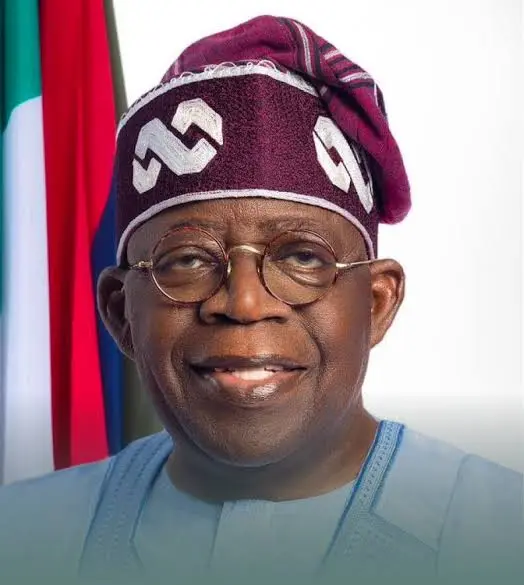
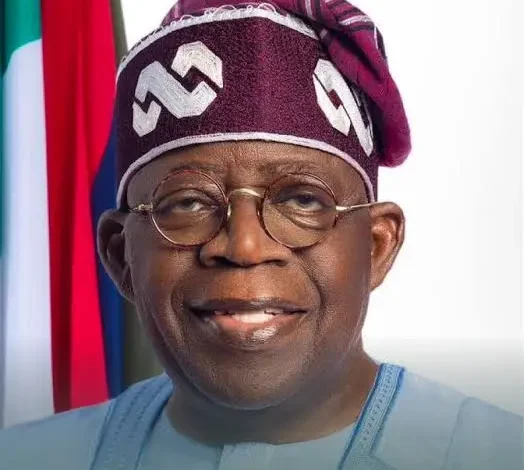
President Bola Ahmed Tinubu’s prolonged stay outside Nigeria has ignited a fresh political and constitutional storm, with opposition figures, civil society groups and legal commentators demanding clarity over the President’s whereabouts and the formal status of presidential authority.
Tinubu left Abuja on August 30 for what the Presidency announced as a three-week annual vacation in Europe. He was expected back in Nigeria on September 20.
He did not return.
The Presidency later announced that the President had extended his stay by a few days and would return over the weekend. But September 27 came and went without his return, deepening questions over how long the President intends to remain abroad and whether the constitutional procedure governing presidential vacations and inability to discharge official functions has been followed.
The controversy has now shifted beyond the President’s travel plans to a more fundamental question:
Who is formally exercising the powers of the President while Tinubu remains abroad?
The Centre for Democracy and Development (CDD) has urged Nigerians to seek judicial interpretation of the matter, arguing that citizens have a right to challenge actions they believe may conflict with the Constitution.
CDD-West Africa Director, Dr Dauda Garuba, acknowledged the President’s right to travel and extend his stay but said the duration of his absence must be considered alongside the constitutional provisions governing the office.
The Presidency, however, insists there is no crisis. Special Adviser to the President on Information and Strategy, Bayo Onanuga, said Tinubu is “hale and hearty” and remains actively engaged in government business despite being outside the country.
According to Onanuga, the President does not need to be physically present in Abuja to perform his duties in an increasingly digital age.
“He has been on a working vacation, which he is perfectly entitled to,” Onanuga said, pointing to Tinubu’s meetings with investors in France and his involvement in discussions surrounding a proposed $7 billion deep-sea port project in Ogun Waterside. But that explanation has not silenced the critics.
The 21-day question
At the centre of the controversy is Section 145 of the 1999 Constitution, as amended.
The provision states that when the President proceeds on vacation or is otherwise unable to discharge the functions of his office, he is to transmit a written declaration to the President of the Senate and the Speaker of the House of Representatives.
Until a contrary declaration is transmitted, the Vice-President performs the functions of the President as Acting President.
The Constitution further provides that where the President fails or is unable to transmit such a declaration within 21 days, the National Assembly may, by a simple majority in each chamber, mandate the Vice-President to perform the functions of the office as Acting President until the President communicates that he is ready to resume his duties.
That provision has become the central battleground in the unfolding controversy.
The key dispute is not simply whether Tinubu can work from abroad. It is whether his extended stay falls within the constitutional circumstances contemplated by Section 145 and, if so, whether the required formal procedure has been followed.
The Presidency has maintained that Tinubu has remained capable of performing his duties throughout his stay abroad.
Critics argue that the description of the trip as a “working vacation” cannot, by itself, determine the constitutional consequences of an absence lasting more than three weeks.
‘No vacancy in Aso Rock’
Senate President Godswill Akpabio has dismissed suggestions of a power vacuum.Speaking at a project commissioning event in Akwa Ibom State on September 22, Akpabio said:
“There is no vacancy in Aso Rock.” His comments came as questions intensified over whether the constitutional mechanism for transferring presidential authority had been triggered.
The Senate spokesperson, Yomi Adaramodu, did not respond to enquiries on the issue at the time of reporting.
Meanwhile, a former member of the House of Representatives, Mark Gbillah, has urged the National Assembly to invoke Section 145(2) if Tinubu does not resume his duties.
Gbillah argued that the Constitution makes a distinction between an official foreign assignment and a vacation and said describing the trip as a “working vacation” should not remove the constitutional requirements applicable to a presidential vacation.
He also questioned what happens when both the President and Vice-President are outside the country.
The former lawmaker recalled the constitutional controversy surrounding the prolonged absence of the late President Umaru Musa Yar’Adua and warned against allowing another dispute over presidential authority to develop. For Gbillah, the issue is ultimately one of constitutional accountability.
‘The President does not need to be in Abuja’
Not everyone agrees that Tinubu’s absence presents a constitutional problem.
Abuja-based lawyer Abdurrahman Salis said the mere fact that the President and Vice-President are outside Nigeria does not automatically create a constitutional vacuum.
He argued that modern technology allows the President to remain in contact with government officials and perform official functions remotely.
A similar position was expressed by Associate Professor and Deputy Vice-Chancellor of Al-Hikmah University, Lanre Sikiru Nurudeen, who said a working leave does not necessarily mean that the President has stopped performing his constitutional responsibilities.
The argument is straightforward: physical absence from Nigeria is not necessarily the same thing as inability to perform presidential functions.
But that position collides with another reading of Section 145, which specifically refers to a President proceeding on vacation or otherwise being unable to discharge the functions of his office.
That tension is at the heart of the current controversy.
Tinubu misses UNGA again
The President’s prolonged stay abroad has also attracted attention because he did not personally attend the 81st United Nations General Assembly in New York.
Vice-President Kashim Shettima represented Nigeria instead.
Onanuga defended the decision, noting that other African leaders, including South African President Cyril Ramaphosa and Egyptian President Abdel Fattah el-Sisi, were also absent from the gathering.
He said Tinubu had formally delegated attendance to Shettima and that Nigeria’s interests were being represented.
But opposition figures have seized on the absence as another example of what they describe as insufficient presidential visibility on the international stage.
Former Vice-President Atiku Abubakar questioned whether Tinubu had transmitted the constitutionally required written declaration to the leadership of the National Assembly.
Peter Obi also raised questions about the President’s whereabouts and his absence from the UN gathering.
The African Democratic Congress Presidential Campaign Council has separately demanded greater disclosure from the Presidency, arguing that Nigerians deserve clarity about the President’s whereabouts and who is exercising presidential authority.
From London to Paris
Tinubu’s current trip began on August 30, when he departed Abuja for what was announced as a three-week vacation.
He spent about a week in London before travelling to Paris.
In France, the President held meetings with French President Emmanuel Macron and businessman Vincent Bolloré, whose business interests include Canal+, MultiChoice and Universal Music Group.
On September 24, Tinubu attended the signing of memoranda of understanding between the Ogun State Government and DP World concerning the development of the Ogun State Blue Marine Special Economic Zone and Gateway Deep Seaport.
The Presidency has pointed to such engagements as evidence that the President has remained actively involved in economic and governmental affairs despite his absence from Nigeria. But the longer the trip stretches, the louder the constitutional questions have become.
A recurring pattern?
Critics have also pointed to previous occasions when Tinubu’s foreign trips lasted longer than initially announced.
In April 2024, he travelled to the Netherlands before proceeding to Saudi Arabia for a special World Economic Forum meeting. His return was delayed, prompting public speculation before the Presidency announced that he would return to Nigeria on May 8.
In 2025, Tinubu attended the BRICS Summit in Rio de Janeiro. Although the summit ended on July 7, he did not return to Abuja until July 13.
In another instance, his 2024 China trip generated questions over his whereabouts after his engagements in Beijing ended, before he was subsequently seen meeting King Charles III in London.
Each episode has fuelled a broader debate about presidential communication, transparency and the public’s right to know where the nation’s leader is and how presidential authority is being exercised.
‘Hale and hearty’
For now, the Presidency is pushing back against the growing criticism. Onanuga insists that Tinubu remains healthy, active and fully engaged.
He said the President would return to Nigeria during the week to participate in activities surrounding Nigeria’s 66th Independence Anniversary and attend a Lagos premiere commemorating the late MKO Abiola.
But the controversy is unlikely to disappear simply because the President returns.The deeper issue raised by the episode is constitutional rather than geographical.
Can a President remain abroad indefinitely while continuing to work remotely without formally triggering the constitutional mechanism governing a presidential vacation?
Does the phrase “working vacation” alter the application of Section 145?
And, if the 21-day period contemplated by Section 145(2) is reached without the required declaration, what exactly is the constitutional responsibility of the National Assembly? Those questions remain at the centre of the debate.
For now, Tinubu remains in charge according to the Presidency and the Senate leadership.But with his extended absence stretching into a fourth week, the argument over where the President is has increasingly given way to a more consequential question: Where, constitutionally, does presidential authority reside while he is away?
Culled from HUHU Online